He Lived with a Fragile Heart. What They Did Next Says Everything
Get link
Facebook
X
Pinterest
Email
Other Apps
Some rescue stories are loud and urgent. Others are quiet. Steady. Almost whispering.
This is one of those stories.
He was not running. Not hiding. Not fighting.
He was simply there.
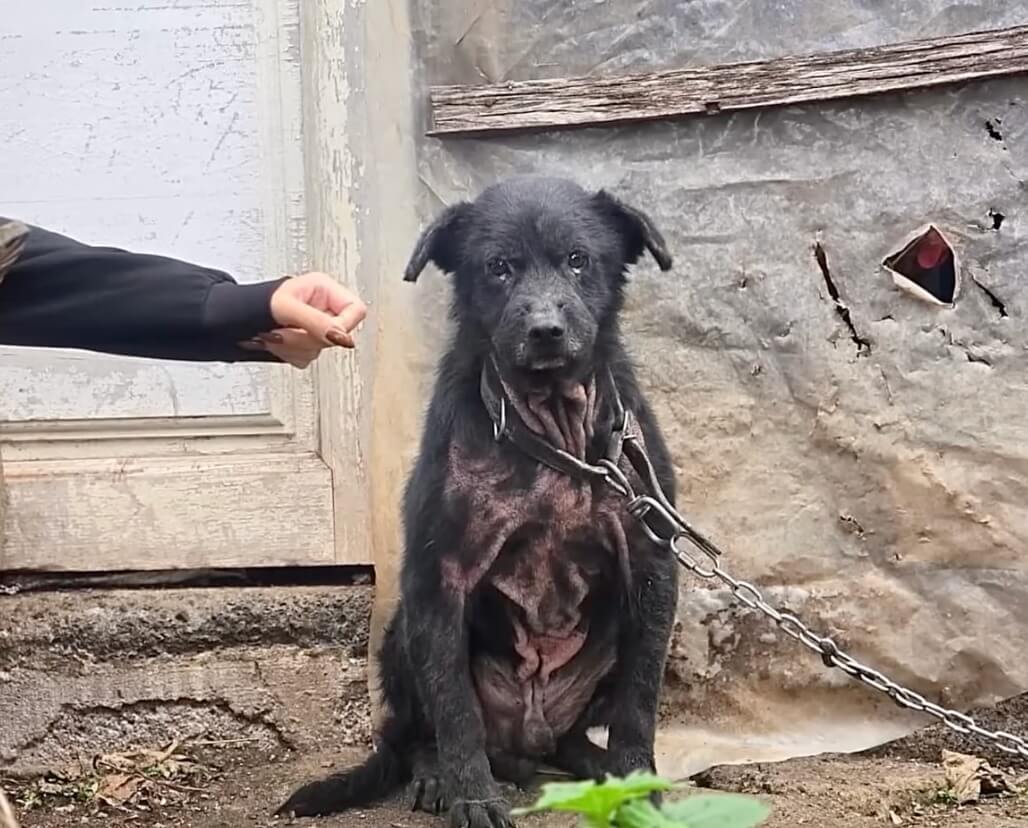
Seven years had passed in conditions that offered little comfort. Dust clung to his coat. Cold nights had settled into his joints. His nails were overgrown. His body carried the stiffness of time spent without softness.
Care had not been consistent. Protection had not been guaranteed.
And yet, when rescuers approached, he did not retreat.
He stood calmly.
Later, reflecting on that first moment, rescuers said, “Lupinho didn’t look like a dog who had given up.”
There was no aggression. No frantic retreat. Just a steady gaze that lingered a second longer than expected.
It wasn’t the look of a dog asking to be saved.
It was the look of a dog asking whether he still mattered.
What happened next would not repair his heart. But it would change how the rest of his life was lived.
Medical testing revealed what his body had been enduring quietly.
Lupinho tested positive for heartworm disease. He also had a congenital heart condition that could not be corrected surgically. There would be no operation. No promise of a long, predictable future.
Heartworm disease is serious even when treated. The American Heartworm Society explains, “Heartworm disease causes lasting damage to the heart, lungs and arteries, and can affect the dog’s health and quality of life long after the parasites are gone.”
That sentence changes how you see him.
Because when you look at Lupinho, you might only notice calm eyes and a soft tail wag. What you do not see is the strain placed on his organs each day.
His congenital defect added another layer. The American Kennel Club notes, “Less than 1% of heart disease in dogs is congenital, meaning the dog is born with the defect.” Rare, but life-shaping.
There would be management. There would be monitoring. There would not be a cure.
A Fragile Heart, A Steady Spirit
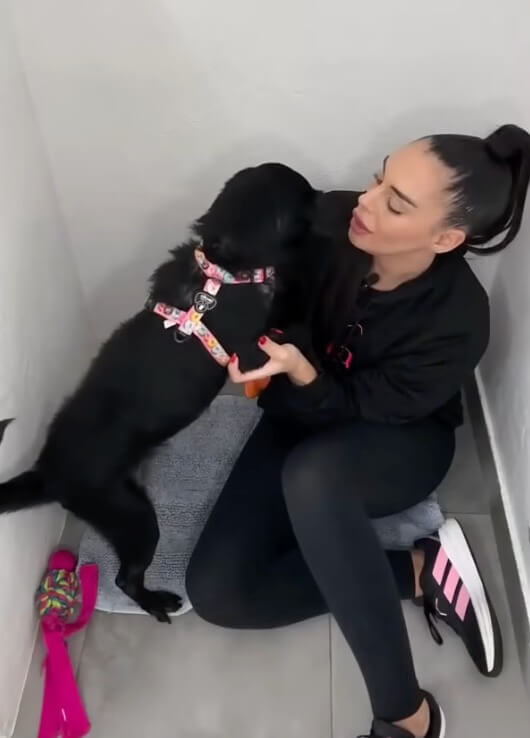
Lupinho with the rescuer
Despite the diagnosis, Lupinho moved gently beside the rescuers. He did not pull away. He did not freeze in fear. He walked as though trust had always been an option.
At night, in his temporary space, he rested quietly. No pacing. No anxious cries.
Loneliness may have defined his past. It did not define his temperament.
The team focused first on stability. Heartworm treatment began slowly and carefully. Activity was limited to protect his heart. Medication schedules were followed precisely.
There are no shortcuts in cases like this.
Week by week, a new rhythm formed. Rest became restorative instead of imposed. Short walks became measured progress. His breathing was observed. His energy noted.
If you have ever cared for a chronically ill dog, you recognize this rhythm. It is not dramatic.
It is steady.
And steady can build something powerful.
Choosing Him Fully
Lupinho bathing
The turning point did not arrive with urgency.
It came with a decision.
The rescuers understood the medical reality. They had spoken with veterinarians. They knew what could and could not be changed.
And still, they stepped forward.
Choosing a dog without a guaranteed future requires clarity. It requires asking a different question. Not “Can we fix this?” but “Can we make his days meaningful?”
Research supports that mindset. A study published by the American Veterinary Medical Association found, “Owners of dogs with heart disease highly value their pet’s quality of life.” That priority often guides care more than statistics do.
Quality over length. Comfort over perfection.
Lupinho was not chosen because he was convenient.
He was chosen because he was worthy.
The Fight to Live Well
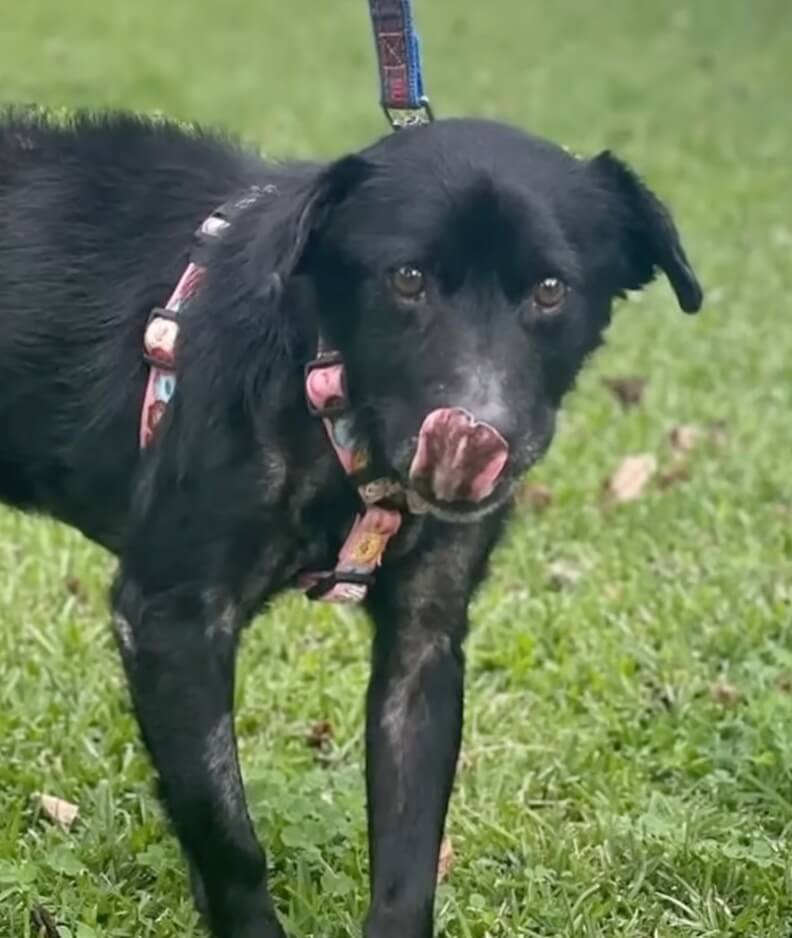
Lupinho recovering
As treatment continued, subtle changes appeared.
Short walks became small trots. He moved easily alongside other dogs. Social, relaxed, attentive. Never withdrawn.
His heart remained fragile.
His spirit did not.
Here is what many people misunderstand. A diagnosis does not erase personality. A medical chart does not cancel joy.
If you ever face a similar situation, talk openly with your veterinarian about comfort and daily function. Chronic heart conditions can often be managed thoughtfully, even when they cannot be cured.
Lupinho’s caretakers adjusted expectations. They celebrated small signs of strength. They monitored his breathing. They honored his limits.
They paid attention.
And he responded.
Belonging, At Last
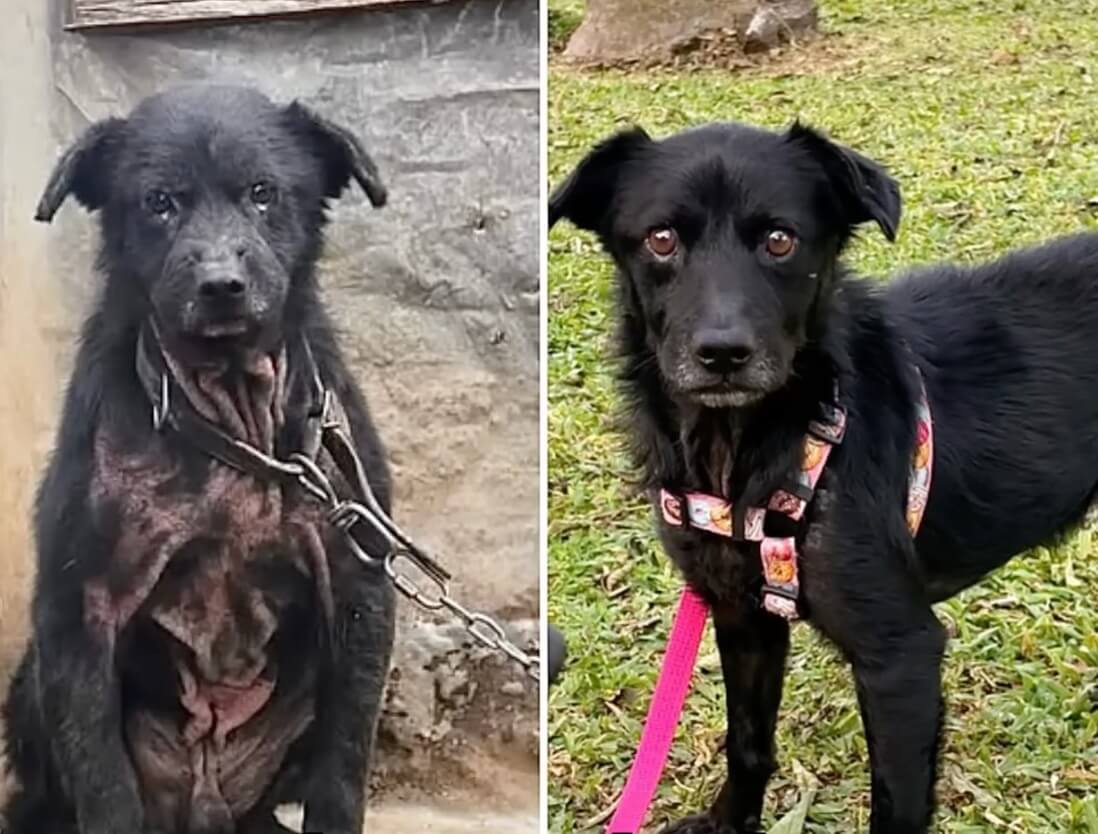
Lupinho before and after
Not every rescue is about dramatic survival.
Some rescues are about dignity.
For seven years, Lupinho lived without consistent comfort or security. Through the work of the rescue team, his days shifted. There were routines. There were gentle hands. There were companions to walk beside.
He wagged his tail slowly, deliberately.
Not wildly.
Just enough to show that he understood.
His heart may never be perfect.
But it is no longer alone.
If Lupinho’s quiet strength moved you, share his story. Someone else may need the reminder that even a fragile heart still deserves to be chosen fully.
The field was silent in a way that felt unnatural. Nothing grew there. Nothing moved. In the middle of it, a mother dog collapsed where her body could no longer carry her forward. Her frame was reduced to skin and bone. Still, she forced her eyes open, lifting her head again and again, scanning the emptiness for movement. Curled tightly against her side was her puppy. The pup pressed close, trembling, hiding behind the only safety it had left. It nudged its mother gently, unsure if stillness meant rest or something worse. No one knew how long they had gone without food or water. Days and nights passed while hunger wore their bodies down. Even then, the mother stayed alert. This was not a story meant to shock. It was a moment witnessed during a real rescue, one that showed how instinct can hold on when strength is almost gone. The bond that kept her breathing How they were found | Source: Yasin Köse She did not move away. She did not rest fully. Her thin bo...
For a long time, nobody seemed to know what to do about the dog with the twisted neck. People saw him wandering the same stretch of road day after day. His head hung sharply to one side, forcing his body into an awkward angle with every step. From a distance, it looked painful. Up close, it was impossible to ignore. His coat had thinned in large patches. Ticks clung to his skin. Walking even a short distance seemed to drain what little strength he had left. Yet every morning, he appeared again. Residents later told rescuers that the stray had been roaming the neighborhood for quite some time. Everyone recognized him. Everyone knew something was wrong. Nobody knew what had happened to his neck. Nobody knew how long he had been suffering. And despite seeing him struggle day after day, nobody stepped in to help. The frightened dog eventually learned to keep his distance. He hid in dark corners. He avoided strangers whenever possible. Rejection had become such a norm...
When Violet was carried into the emergency room, it was not under hopeful circumstances. According to the rescue source Sky Sanctuary , Violet had been brought in at a point where her owner believed there was nothing left to do. Treatment was reportedly refused. Euthanasia was requested. The medical team paused. They looked at Violet more closely. She was weak. Severely underweight. Barely responsive. Her fur hung in dense, tangled sheets around her body. Every sign suggested a dog at the end of her strength. But when they checked her vitals, something did not match the assumption that she was beyond saving. There was still stability. There was still possibility. When staff indicated that authorities might need to be contacted, the owner left the facility. Violet did not. In that moment, the question shifted. Not whether she could be saved. But whether someone was willing to try. A Body Shutting Down Violet’s condition initially | Rescue credit: Sky Sanctuary ...




Comments
Post a Comment